
The Definitive AI Engineering Salary Benchmarks: 2026 US Market Report
15 Jan, 20264 minutesThe Definitive AI Engineering Salary Benchmarks: 2026 US Market ReportAI Engineering Salary ...


The Definitive AI Engineering Salary Benchmarks: 2026 US Market Report
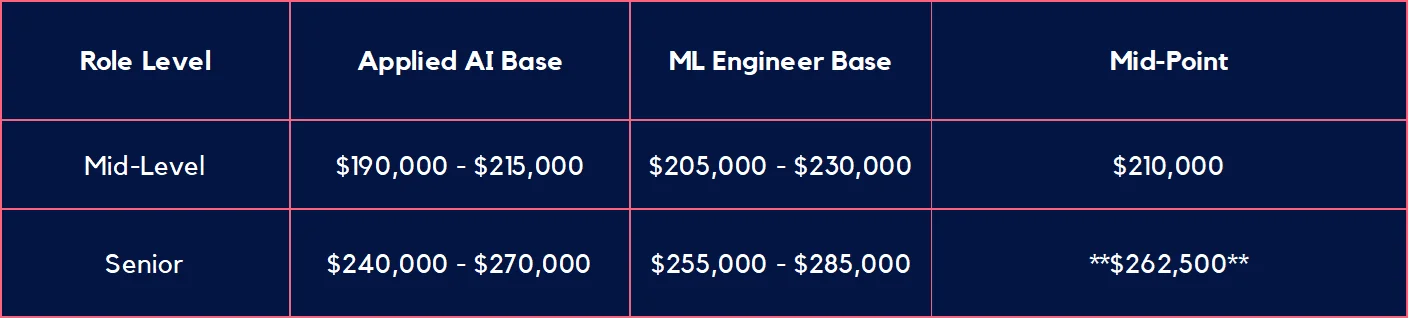
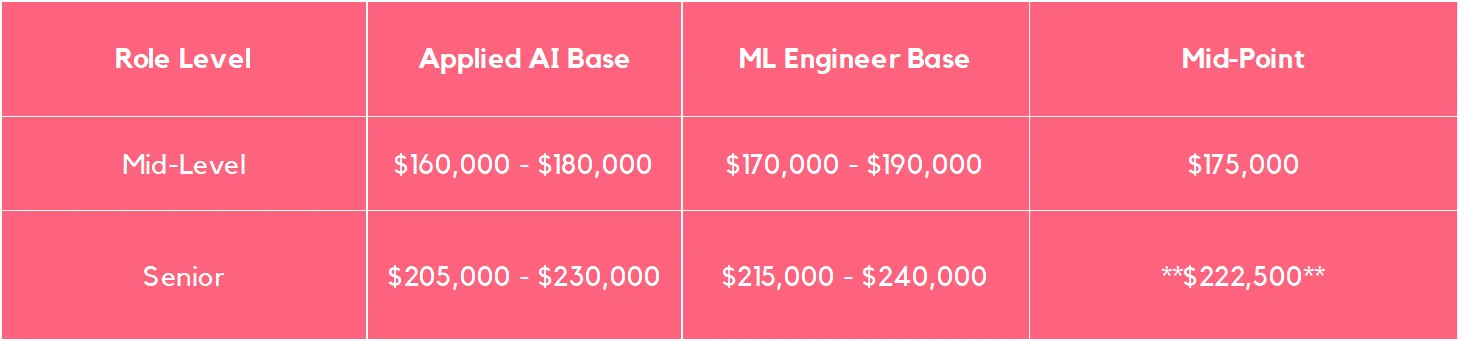
AI Engineering Salary Benchmarks 2026 US reveal a national senior median of $230,625. While Zone 1 ML Engineers reach $270,000, Zone 3 hubs like Austin and Boston offer a standardized $222,500, providing a strategic high-growth alternative for mid-sized firms.
The United States technology landscape is currently navigating a "Great Recalibration." As of Q1 2026, the era of speculative "hype hiring" has ended, replaced by a rigorous, data-centric approach to building AI teams. For CTOs, Founders, and HR Leaders at companies with 10–100 employees, the challenge is no longer just finding talent, it is pricing it correctly to avoid the crippling "Cost of Vacancy."
At MRJ Recruitment, our specialized tech recruitment services have seen that the "AI Premium" has become a permanent fixture of the US economy. This guide provides a deep dive into AI Engineering Salary Benchmarks 2026 US, offering the high-fidelity data required to execute a winning tech recruitment strategy USA.
1. National Base Salary Benchmarks: The Role Split
In 2026, the market distinguishes clearly between two critical roles: Machine Learning (ML) Engineers (architecting models and pipelines) and Applied AI Engineers (integrating LLMs and agentic workflows into products).
We have adjusted our national benchmarks to reflect the aggregate data across all competitive US zones.
Table 1: 2026 US National Base Salary Averages (By Role)
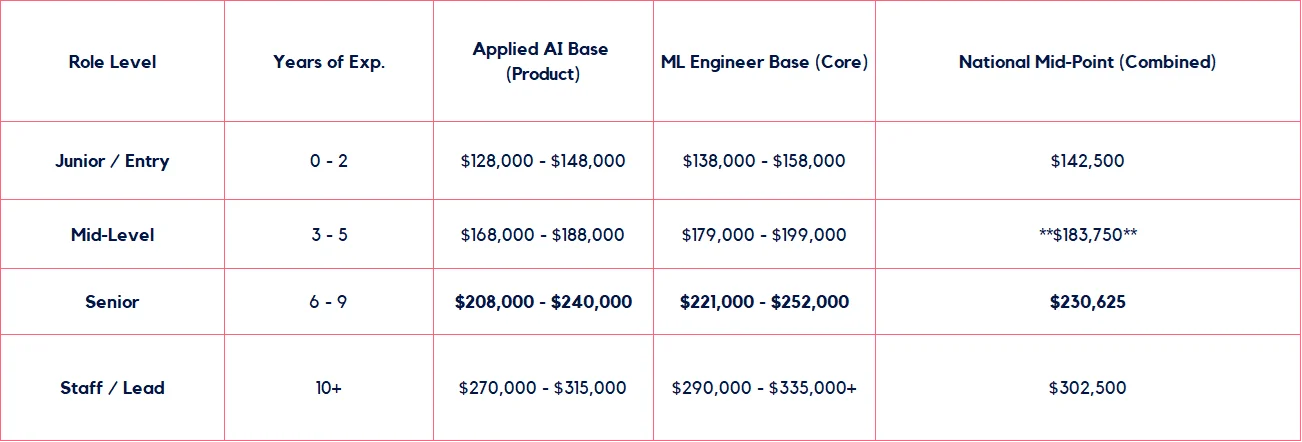
We have observed that firms failing to meet the $200k base salary floor for senior talent in 2026 face an average time-to-fill of 114 days.
2. Regional Market Variations: The Four Zones
The US market is no longer a monolith. To optimize your AI Engineering Salary Benchmarks 2026 US strategy, budgets must be aligned with four distinct competitive zones.
Zone 1: The Hyper-Hubs
Includes: New York City and San Francisco Bay Area. These cities dictate the global "ceiling" for AI pay. Companies competing here are fighting against the gravity of Big Tech's massive balance sheets.
Zone 2: The Premium Tech Centers
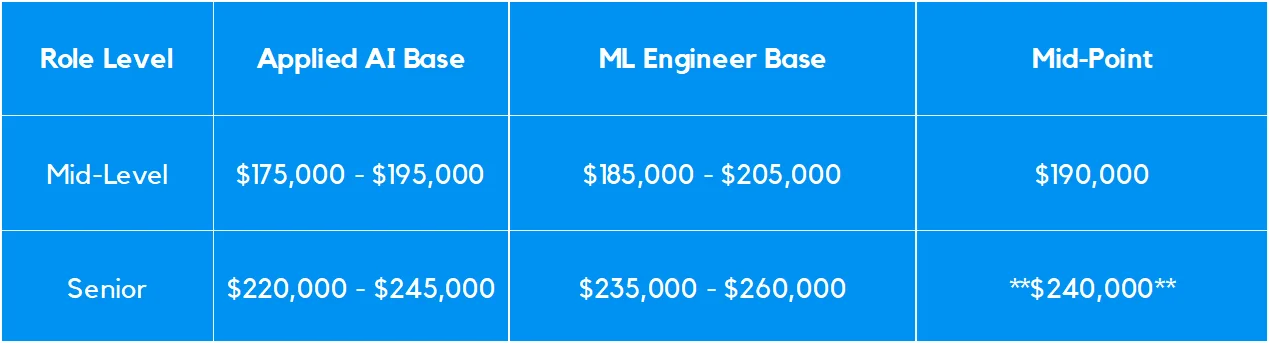
Includes: Los Angeles, Seattle, Washington D.C. Seattle and D.C. have seen a surge in 2026 due to the "Cloud & Defense" AI boom. Salaries here are currently tracking just 8–10% behind the Bay Area.
Zone 3: The High-Growth Hubs
Includes: Austin, Boston, Denver, Houston, Portland, Sacramento, San Diego. Austin and Boston now offer a standardized, highly competitive salary band that allows organizations to attract top-tier talent without paying Zone 1 premiums.
Zone 4: The Efficiency Hubs
Includes: Raleigh-Durham and all other US cities. Zone 4 offers a massive opportunity to secure high-quality talent at a 15–20% discount relative to Zone 1, provided the offer includes a high quality of life and remote flexibility.
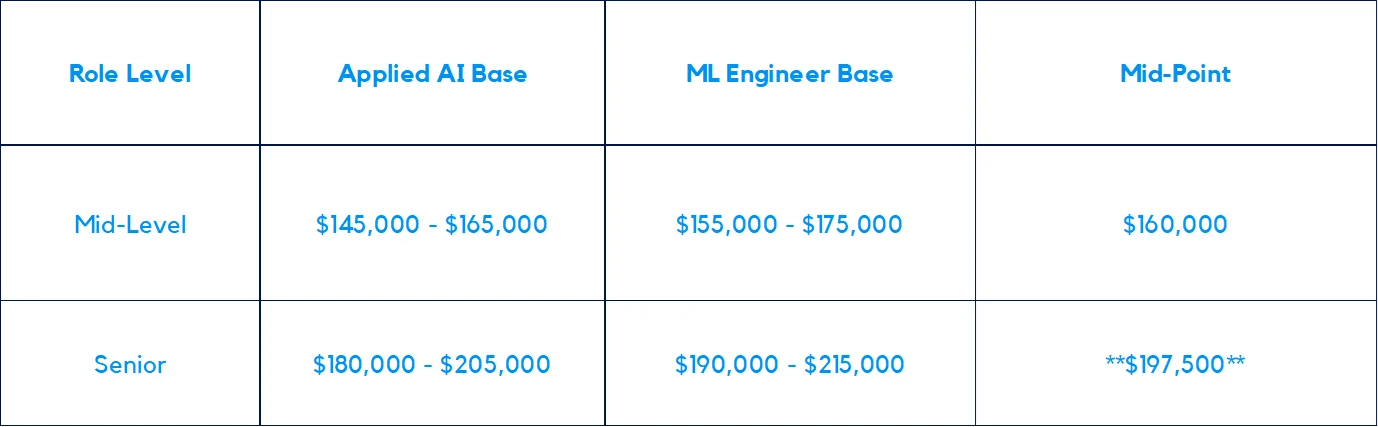
3. Remote Working: The "National Pay Scale" Trend
In 2026, "Remote" is no longer a way to save money on salaries. Top-tier AI talent is geographically distributed, and remote AI developer salaries are now calculated against a national tech-hub median (typically anchored to Zone 3) rather than a candidate's local zip code.
- Senior Remote Base Median: $206,600
- Staff Remote Base Median: $278,000
Workforce planning in 2026 requires accepting that a candidate in Phoenix (Zone 4) will demand Austin-level pay (Zone 3) if the work is remote and high-impact.
Implementing the 2026 Salary Framework
Benchmarking is the foundation of a successful hire, but execution requires local market nuance. At MRJ Recruitment, we constantly calibrate our internal databases against real-world offer rejections to provide the most accurate benchmarks for our US partners.
4. Two-Year Trend Analysis: 2024 – 2026
The AI hiring trends US 2026 data shows a distinct recovery from the stabilization period of late 2024.
- 2024 (The Plateau): AI base salaries flattened as firms waited to see the ROI of early LLM initiatives.
- 2025 (The Agentic Surge): Demand for engineers who could deploy autonomous workflows spiked, causing mid-level salaries to jump 9.2%.
- 2026 (The Current Reality): We are seeing a 7% average increase in AI base salaries since 2025. Conversely, traditional full-stack roles in non-AI sectors have stabilized or seen slight decreases, widening the specialization gap.
FAQ: US AI Hiring Data 2026
What is the difference between an AI Engineer and a Machine Learning Engineer? Machine Learning Engineers focus on core model architecture and MLOps; they command a 5–10% premium. Applied AI Engineers focus on integration and product features; while their base is slightly lower, they are currently seeing the fastest demand growth.
What is the national midpoint for a Machine Learning Engineer? Based on our 2026 zonal data, the national midpoint for a Mid-Level ML Engineer is $189,375, while a Senior ML Engineer is $236,875.
Are remote AI salaries lower than in-office? No. In 2026, the remote AI developer salary median is $206,600 for senior roles. Most companies have moved away from "local" pay for remote workers, instead anchoring offers to a national median (Zone 3).
Why are these figures higher than some 2025 salary surveys? Most traditional salary surveys (like SalaryCube or Glassdoor) lag the actual market by 6–18 months. Our 2026 benchmarks account for the 9.2% 'Agentic Surge' seen in 2025 and the subsequent 7% growth in 2026, ensuring MRJ clients aren't using 'yesterday's data' to solve 'tomorrow's hiring' needs.”
Your Next Step: Mastering AI Benchmarks
- Audit Your Zones: Categorize your locations into Zones 1–4 using the tables above.
- Verify Remote Strategy: Ensure your remote offers are anchored to at least Zone 3 ($205k+ for senior).
- Get a Custom Report:
Contact MRJ Recruitment
Check out our
Author Bio
Rekiel Moss is a Senior Multi-Disciplinary Specialist at MRJ Recruitment with a decade of experience in the US tech hiring market. By merging real-time placement data with global economic trends, Rekiel provides CTOs and HR leaders with the strategic clarity needed to win the 2026 talent war. Working across the UK and major US tech hubs, Rekiel is dedicated to helping high-growth companies build world-class AI teams through data-driven recruitment.